Remediation protocols focus on stopping kitchen infestations before grain-boring insects expand behind casework into adjacent wall voids. In historic brick rowhouses across Fells Point, Canton, and Federal Hill, shared…
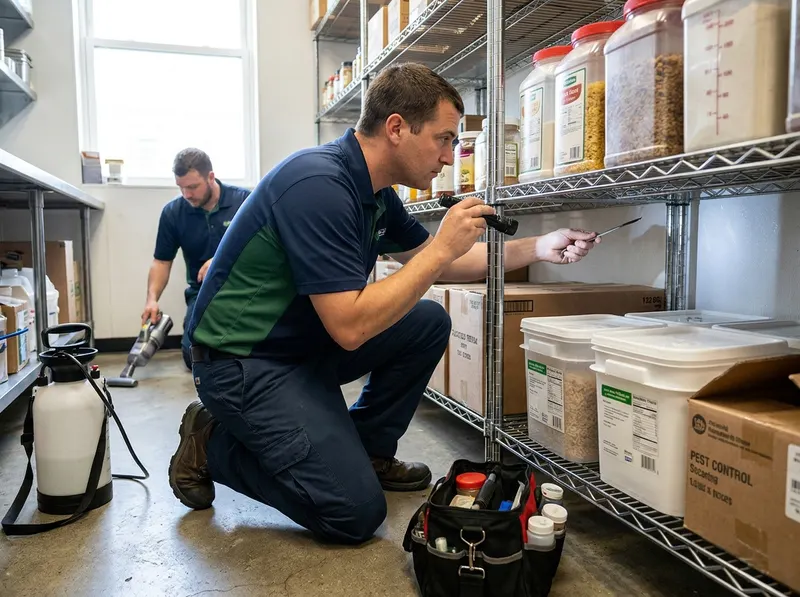
Remediation protocols focus on stopping kitchen infestations before grain-boring insects expand behind casework into adjacent wall voids. In historic brick rowhouses across Fells Point, Canton, and Federal Hill, shared party walls and historic pine subflooring allow pantry moths and flour beetles to migrate between pantry closets and sub-floor expanses. Structural features in older Mount Vernon apartments and Hampden homes, such as tongue-and-groove lath and unfinished shelving joints, frequently trap spilled organic flour and grain dust. This accumulation supports active breeding cycles out of direct sight, rendering topical spray applications ineffective and risking chemical contamination of surrounding cooking surfaces. A systematic physical extraction combined with localized pheromone interceptors neutralizes existing breeding reservoirs while keeping food preparation areas protected.
A complete service begins with a visual inspection of dry storage containers, cereal boxes, pet food sacks, and spice cabinets to identify the primary breeding source. Technicians then systematically clear interior shelving, execute HEPA-filtered vacuum extraction to pull microscopic pupae and larvae from shelf-pin holes and door hinges, and apply food-safe desiccant treatments inside structural gaps. In Charles Village duplexes or Roland Park residences with extensive walk-in butler pantries, secondary monitoring grids are positioned near food preparation lines to track insect activity across 14-day intervals. For multi-unit townhomes near Patterson Park and Locust Point, containment zones prevent beetles from escaping into shared vertical plumbing chases during initial shelf cleanouts.
Selecting professional stored product pest remediation resolves root breeding pockets that surface-level kitchen cleaning leaves behind. Simple disposal of an infested grain package frequently misses pupae concealed beneath shelf brackets or behind baseboard molding, leading to re-emergence within 21 to 30 days. Conversely, whole-house chemical fumigation exposes residential living areas to unnecessary synthetic compounds without addressing the structural crumbs fueling the pest population. Precision remediation balances source elimination and structural isolation, delivering measured insect containment while preserving kitchen sanitation and domestic air quality.
Every job gets a firm, written price after a free on-site visit.
Tell us about your stored product pest remediation job in Baltimore and we'll send a clear, written quote, usually the same day.
 Zandora Pest Relief