German cockroach infestations in Baltimore require distinct containment strategies compared to larger outdoor perimeter pests. In dense brick neighborhoods like Fells Point, Mount Vernon, and Patterson Park, historic…
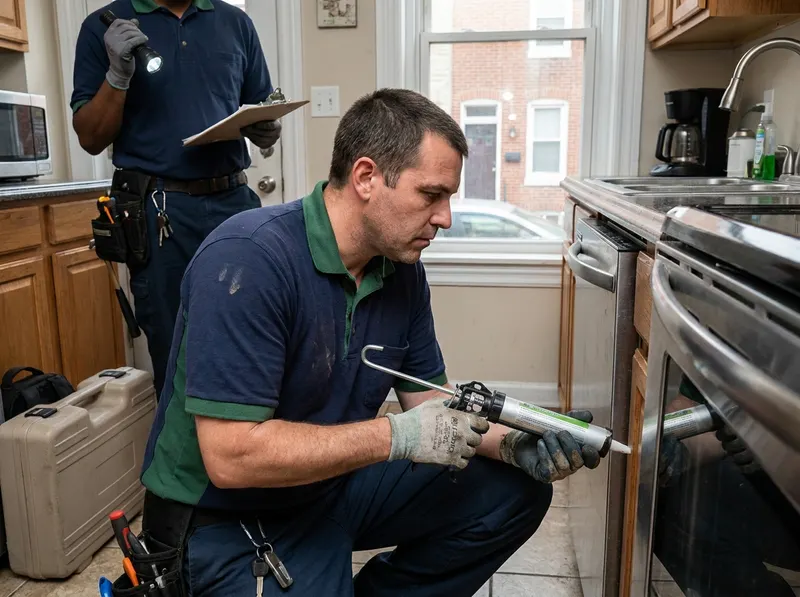
German cockroach infestations in Baltimore require distinct containment strategies compared to larger outdoor perimeter pests. In dense brick neighborhoods like Fells Point, Mount Vernon, and Patterson Park, historic rowhouses share utility runs, party walls, and plumbing conduits that facilitate rapid migration between attached properties. Standard over-the-counter pyrethroid sprays frequently trigger an escape response, causing female roaches carrying egg cases (oothecae) to scatter deep into ceiling cavities, subflooring, and neighboring residences. The containment protocol focuses on non-repellent formulations that allow insects to consume targeted bait matrixes and carry compounds back to aggregate harborages, preventing reproductive replacement without contaminating adjacent structural spaces.
Treatment selection depends directly on the structural layout of the dwelling. Single-family detached homes in Roland Park allow for exterior buffer establishment alongside interior food preparation zone containment, whereas attached brick residences in Canton, Federal Hill, and Locust Point require mechanical exclusion around shared plumbing stacks and structural floor gaps. If an infestation is localized to an isolated galley kitchen, targeted bait placements and sticky monitoring traps resolve the harborages directly. If insects have spread along pipe runs into second-story bathrooms or Charles Village multi-unit tenant walls, full domestic containment requires micro-encapsulated formulations inside pipe chases alongside an insect growth regulator (IGR) to halt nymph maturation.
Safe recovery of living and cooking environments follows three structured stages: 1. Physical inspection identifies primary aggregation points around heat sinks, including dishwasher motors, refrigerator compressor coils, and cabinet corners. 2. Precise micro-placements of bait matrixes are deposited inside hidden void spaces, eliminating child and pet contact risks while drawing feeding adults away from food prep surfaces. 3. Mechanical exclusion seals gaps greater than one-eighth of an inch around supply pipes and baseboard seams to sever travel lines. Re-inspection occurs at 14 to 21 days to assess egg hatch rates and confirm complete reproductive stoppage.
Every job gets a firm, written price after a free on-site visit.
Tell us about your german cockroach elimination job in Baltimore and we'll send a clear, written quote, usually the same day.
 Zandora Pest Relief